
No one grows up thinking their industry is eventually going to be threatened by Artificial Intelligence and technology. All those unfortunate engineers and coders who only ten years ago seemed the future of blue-collar workforces are proof of that.
Not that we’re immune in the field of music. My hypothesis is that private music lessons will be overtaken much sooner than we think — already, I’ve had several students prove that digital technology (like the app Flowkey) is offering a cost-effective and ‘good-enough’ solution to expensive private lessons. Sure it’s limited, and it won’t train professionals — but how many students actually have the capacity or desire to become professional musicians?
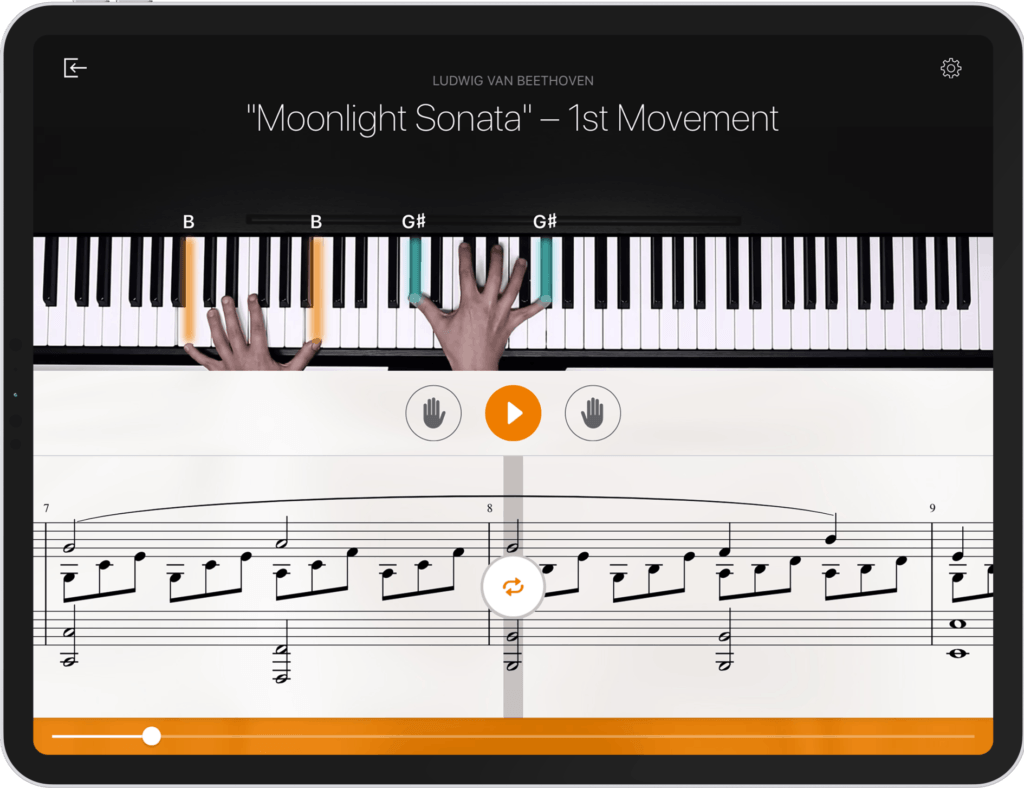
Flowkey — an app that allows children and adults to self-teach to a relatively good beginners level.
AI teachers will be better for more students than we are: they’ll offer the personal touch and technical requirements for each individual. Picture the biomechanical feedback and demonstrations a machine will be able to give regarding technique; the ability to read when a student is fatigued or frustrated and needing a change of direction; an algorithm that can diagnose and explain the issues with rhythm or note-reading that might take even the best teachers a while to identify. All you’d need is monthly subscription and a webcam to produce fairly good music makers and this is awesome (because the more people playing music = the more people engaging with music on a deeper level = the more people coming to concerts and wanting to learn more about music).
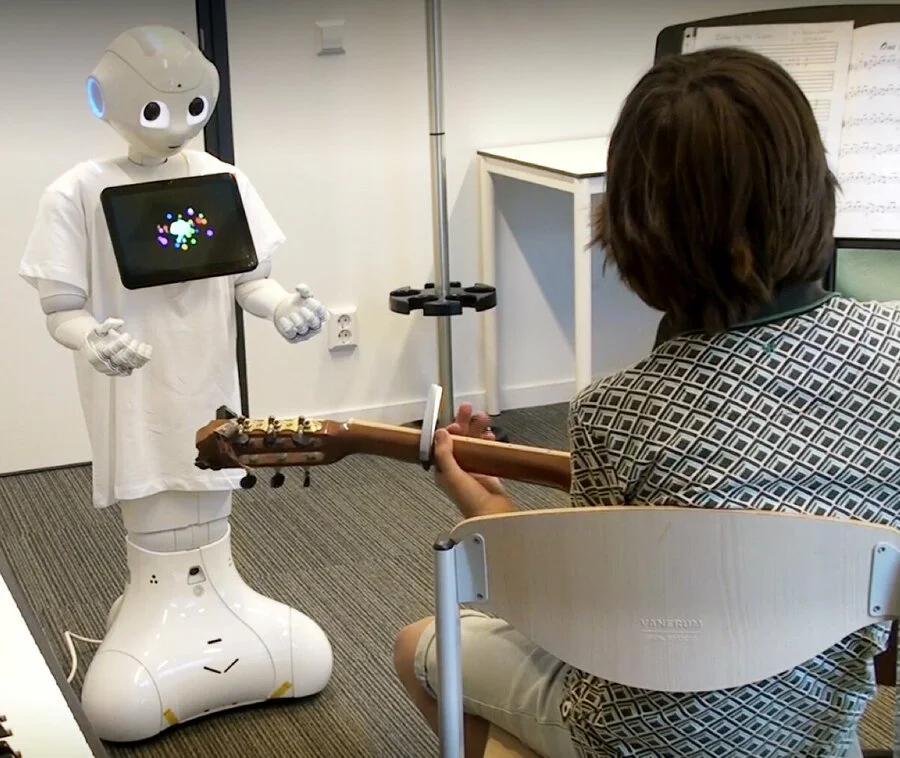
The future is now and super cute — robot music lessons, anyone? Source
Private Piano Lessons will be even more the preserves of the elites, because a 20€ monthly subscription is better than a 200€ monthly invoice — not to mention our fees will need to go up to cover the losses. So we’ll retain a few lessons but lose the vast majority of our clientele to cheaper, more effective options.
Well… Shit.
It’s hard to compete with a product that’s cheaper and more efficient, so… what should we do? Cry and rage against the greedy tech corporations who are stealing our jobs? Blindly ignore the encroaching threat of AI and brush it off with a ‘oh it’ll never replace us’ attitude that horse-carriage drivers similarly adopted a century ago? Or should we accept defeat, and simply remember the old days when we’d berate children daily about poor scale technique and fingering selections? Oh, how we used to complain about these awful kids, but how we’d give our left leg to return to those days of plenty!
Hold your now-mostly-reserved-for-the-financial-elite-like-music-lessons-could-be horses: before descending into nihilistic stupor, I think that there could be another option — one that allows our industry to not only escape this dire future, but potentially emerge with greater appreciation… and we don’t even have to change anything!
Firstly, we need to start identifying and communicating what music lessons are all about: that is, helping people achieve slow dopamine release. What is slow-dopamine release? Essentially, it’s the action that occurs when one works and receives a chemical reward; the feeling of pleasure accompanied by it when one fixes their washing machine, finishes a project at work, or yes, nails a tricky section in a piano piece they’ve been working on for weeks.
Being a child now must be remarkably difficult, considering they’re essentially all fast-dopamine addicts. My 18-month old nephew can’t feed himself properly, but he can operate an iPad. He’s growing up in an age where tech companies and successful media apps are operating with impunity as they addict an entire generation with rapid hits of never-ending digital stimulation that is ubiquitous everywhere, with very few moments of respite.
Well… Shit.
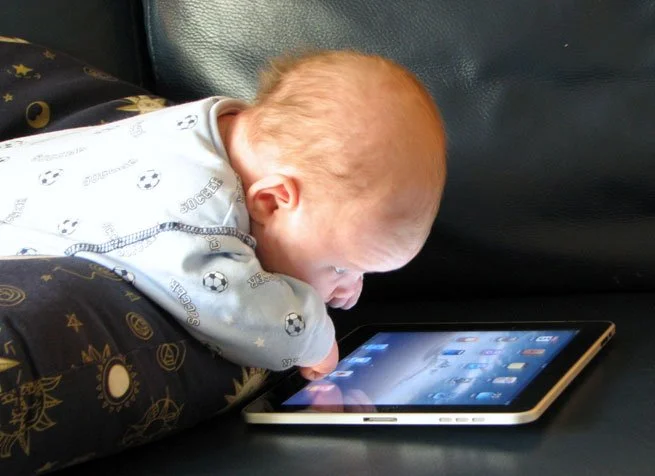
Apparently it’s not only my nephew who is a tech-genius. Source.
The parents of my students have been paying me for the past two decades for more than just imparting the value of an eighth note or the difference between D# and Eb. Sure there are some who clearly enjoy the expensive babysitting, but many have mentioned they employ me for teaching simple things such as general life skills, how to respond when challenged by difficult tasks, dealing with pressure, the act of gradually building a skill, critical thinking and creativity, and yes, that a reward is far greater when it’s the result of hard work as opposed to the easier satisfaction gained through constant swiping.
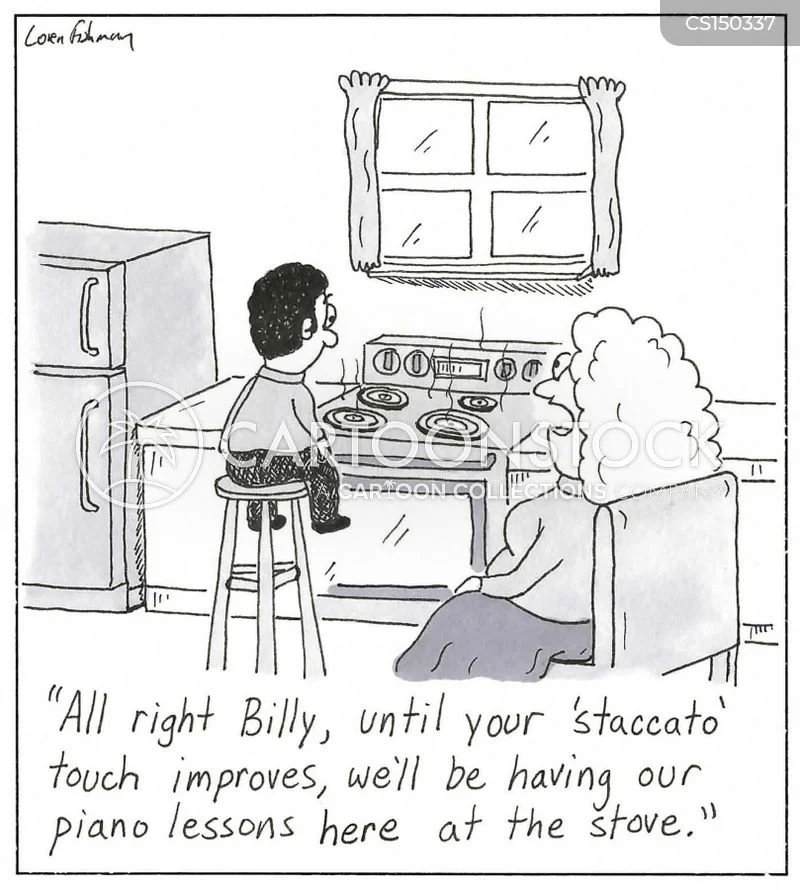
©Loren Fishman — try being that creative with your pedagogy, AI.
When you put it like that, it’s patently clear that a) I’m chronically underpaid, and b) our value proposition as music teachers is only multiplying in line with technological evolution: AI will most likely touch some of these themes at some point, but for now, our responsibility as instrumental teachers is clear, as is our value — and best thing is, we don’t need to upskill or change anything, as this is what we’ve always done!
Can the communication of this value be the bastion against encroaching tech developments? Probably not, but it’s worth letting everyone know whenever we can, in order to remind folks that there are some pretty great solutions already in existence.
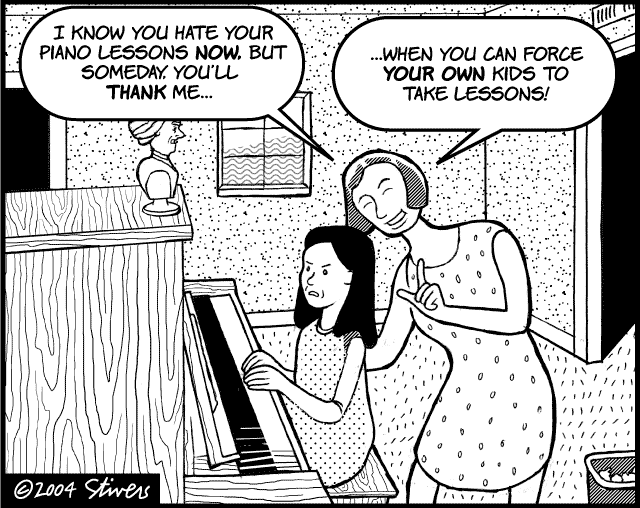
Highlighting the need for piano lessons for generations to come.
AND FURTHER:
I was listening to the Prof G podcast today titled ‘Dopamine Nation and the Age of Digital Drugs’ with Dr Anna Lembke (author of a book with a similar title), that discussed all the issues with addiction, loneliness and dopamine, and during the discussion I had the thought that music — specifically classical music with its long form and structural format which only rewards listeners with the final resolution after a long period of tension buildup; combined with the innate connectivity that accompanies the social act of concert going has a similarly strong value proposition for folks who want to explore show dopamine release without having to actually learn an instrument? What if we marketed our work towards the social elements of concerts and the dopa-restorative effect of listening — pivoting away from a pure entertainment purpose, so we’re not trying to compete with TikTok, but be a counteracting balm for it.